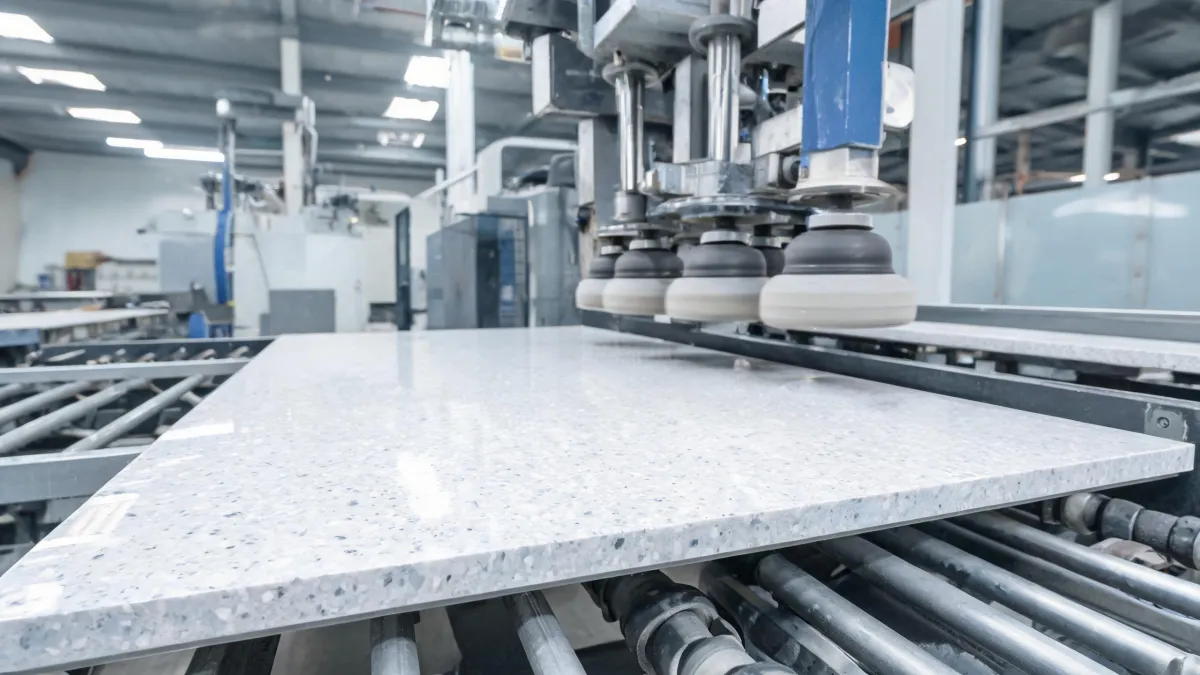
I was staring at a rejected batch of countertops—our own production. The client refused delivery of 50 slabs because the color "didn't match the sample." We're a Breton engineered stone manufacturer, and matching a sample is kind of our whole thing. But this specific order, for a private-label client, was a mess. And honestly, I couldn't blame the client. I blamed their spec sheet.
That Time a Spec Sheet Made Me Want to Quit
Back in Q1 2024, we onboarded a new wholesale buyer from the Northeast. They came to us asking about "granite countertops specification guide" compliance. They had a huge project, wanted a specific aesthetic, and wanted their brand name on the boxes. We specialize in white-label and private-label support, so we said, "Great, send us the specs."
What they sent was basically a cut-and-paste job from a commercial kitchen project. It cited ASTM C615 for granite, but also asked for "Breton engineered stone" and an antimicrobial additive. Huge red flags. When our engineers reviewed it, they estimated a 15% markup just for the ambiguity. We called the client to clarify, but they said, "Just make it look like the sample."
The Turning Point
Fast forward to production. We fabricated 50 flawless slabs using the Breton process. They had the depth, the veining, and the polished gloss. But when the client saw them, they freaked out. "This isn't granite!" They claimed we ignored their ASTM C615 specification. You know that moment when you realize the other person isn't just being difficult—they genuinely don't know the difference? That was it. They didn't know that engineered quartz and natural granite are completely different materials. They thought "Breton" was just a fancy word for a type of granite finish, not a technology platform that creates a totally different product category.
I managed to keep my cool, but internally I was kicking myself. Looking back, I should have pushed back on their specification sheet immediately. But I made the call to proceed based on the assumption that a "granite countertops specification guide" meant they knew what they were doing. Wrong. What I learned that day is now a core part of how we onboard every OEM and private-label partner.
What We Taught Our Customer About Stone Specs
Here's the thing about our industry: material terminology gets thrown around loosely. Even experienced contractors mix up "quartz" and "quartzite." So when a distributor sends over a spec sheet, we pay attention to three things:
- The material standard listed. Per ASTM C615, natural granite is defined by its mineral composition and physical properties. It's a natural rock. Engineered stone, on the other hand, is covered by standards like ANSI A137.1 (for quartz surfaces) and relies on resin binders and quartz aggregates. The Breton process specifically combines vibration, compression, and vacuum to create a dense, non-porous surface.
- The maintenance requirements. These two materials have very different durability profiles. If you're a distributor, mixing them up on a spec sheet is like putting "steel" and "aluminum" in the same sentence without clarifying which one you actually want to buy. The FTC guidelines on marketing claims are clear on this: you can't call engineered quartz "granite," and you can't claim it's a natural product when it's manufactured. You must substantiate the claim. (Note to self: we should publish this comparison on our site for our sales team to reference.)
- The edge profiles and finishes. This is where the "breton cap" confusion came in. We use "BretonCap" to refer to a specific edge profile we offer in our OEM program. But a client once walked into our showroom asking for a "Breton cap," thinking it was a type of sink cap or a treatment for an outdoor kitchen. It's a small detail, but if it's not defined on the spec sheet, the fabrication shop will make assumptions. And assumptions cost money.
The "Power Washing" Call
Another classic moment: a customer in Breton Woods called us asking about "power washing" their new quartz countertops. They assumed engineered stone was like concrete, and that pressure washing was acceptable maintenance. For the record, you should never pressure wash engineered stone. The high-pressure water isn't going to remove resin, but it will blast out the grout or sealant if you have a seam. A pH-neutral cleaner and a soft cloth is basically all you need. It took us 10 minutes to explain this to the client. That 10-minute conversation saved us from a future warranty claim and made them feel more confident about their purchase.
The Lesson: Education Is a Feature
We ended up redoing the client's spec sheet with them. We walked them through the ASTM standards, the ANSI standards, and our in-house manufacturing standards. We set clear expectations about what "granite" means technically versus what "granite look" means aesthetically when crafted using engineered stone. Since implementing our verification protocol in 2022, I've personally reviewed 200+ unique items annually, and I can tell you that 90% of quality disputes come down to unclear specs—not defective manufacturing.
The result? The client paid a little more for the correct material, we delivered exactly what they needed, and they've since placed three more orders, one of which was a 50,000-unit annual volume for a commercial franchise roll-out. If we had just tried to "win" the argument by insisting their original spec was wrong, we would have lost the account entirely. Instead, we educated them. An informed customer asks better questions and makes faster decisions. (Mental note: document this cross-sell process for the sales team.)
So yeah, it took a $22,000 redo and a delayed launch to teach me that trusting a generic spec sheet is never safer than educating the client on the specifics. If you're in the B2B wholesale or private-label countertop business, take the time to understand the material differences yourself. Then, guide your customer. Your quality team will thank you.