Who this checklist is for
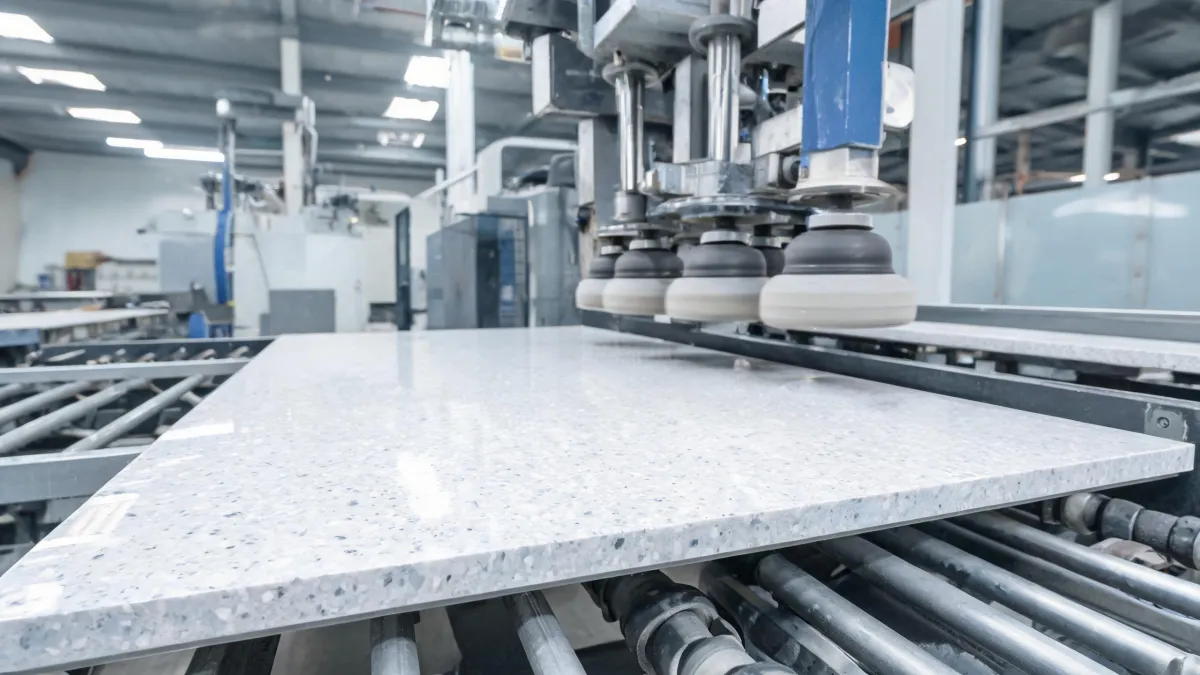
This is for wholesale buyers, distributors, fabricators, and private-label teams placing bulk stone countertops orders. If you're sourcing Breton quartz countertops, engineered stone, granite, or solid surface, this checklist is designed to stop the specification mistakes that cause rework, delays, and awkward emails. I use it before every PO. There are 9 steps. None of them are theoretical.
I've been handling wholesale countertop orders for 8 years. I've personally made (and documented) 11 significant mistakes, totaling roughly $18,400 in wasted budget. In my first year (2017), I assumed 'Breton' was just a marketing label. Three rejected batches later, I learned the process controls slab consistency. Now I maintain our team's pre-order checklist to prevent others from repeating my errors.
Step 1: Define the end use before you talk materials
Don't start with color. Start with where the slab goes: kitchen, bath, commercial bar, outdoor kitchen, lab. End use drives thickness, finish, edge profile, and fabrication method. A 20mm slab that works for a residential vanity won't automatically work for a restaurant prep counter with a dropped edge.
Checkpoint: write one sentence. 'This order is for X application, fabricated by Y method, installed in Z environment.' If you can't write that, stop. You're not ready to spec.
Step 2: Lock the material family and the process
Breton quartz countertops, granite, and solid surface are not interchangeable. Even inside engineered stone, the production process matters. A Breton CAP line can give you tighter batch consistency than a generic line, but it doesn't fix a vague spec. What most people don't realize is that 'Breton process' is not a single setting. It's a technology platform, and the operator's formulation, curing, and polishing choices still affect the final slab.
Checkpoint: confirm material family, brand/process claim, and supplier's actual production line in writing. If they say 'Breton' but can't explain the CAP setup, ask again.
Step 3: Specify slab size, thickness, and tolerance numerically
This is where I lost $6,800 in September 2022. I approved 42 slabs for a bulk stone countertops order. The PO said '20mm.' It didn't say finished or raw, nominal or actual. The batch arrived at 19.2mm finished. The fabricator's edge profile showed a lip. We redid 42 pieces. One week late.
Write it like this: nominal thickness, finished thickness, allowed tolerance, slab length/width, and whether calibration is included. For engineered stone, ask for the producer's tolerance table. 'Standard' means nothing across suppliers.
Checkpoint: every dimension has a number and a unit. 'Approximately' is not a tolerance.
Step 4: Confirm color and pattern consistency across the batch
Breton quartz countertops usually give better batch-to-batch consistency than natural stone, but 'usually' isn't a purchase order. Veining, particle size, and gloss level can shift between lots. If your project needs matched slabs, say so before production, not after.
Checkpoint: ask for lot numbers and a batch photo under daylight. For large orders, request slabs from the same production run where possible. If the supplier won't commit, plan for blending.
Step 5: Approve physical samples and keep the signed reference
Digital photos lie. Screen calibration changes tone. I once approved a white quartz from a phone photo. The delivered slab had a warm cream cast. It looked fine on my screen. The result came back as a customer complaint. 18 slabs, $3,200 order, straight to the negotiation table. That's when I learned to sign and date a physical control sample.
Checkpoint: two samples. One stays with you. One stays with the supplier. Both labeled with material name, finish, lot, and date.
Step 6: Nail the finish, edge, and fabrication details
This is the step most buyers rush. Finish: polished, honed, brushed, matte. Edge: eased, bullnose, mitered, waterfall. Cutouts: sink, cooktop, faucet, outlet. Backsplash: height, material, corners. Drainboard: yes or no.
For OEM and private-label work, add packaging, pallet configuration, and labeling. A stone countertops OEM order can be perfect on the slab and still fail at the warehouse because the label spec was verbal.
Checkpoint: attach a fabrication drawing and a packaging spec to the PO. No drawing, no approval.
Step 7: Verify OEM, private-label, and documentation requirements
Wholesale and private-label programs live on paperwork. Confirm MOQ, lead time, labeling artwork, barcode format, country-of-origin marking, and what documents ship with each lot. If you're selling under your own brand, get written approval for logo placement and packaging claims.
For Made in USA claims, don't guess. Per FTC guidance, an unqualified 'Made in USA' claim requires that all or virtually all of the product's content is made and sourced in the U.S. Source: ftc.gov. If your Breton quartz countertops are fabricated overseas, that claim is a problem.
Checkpoint: create a one-page compliance sheet per SKU. If the supplier can't fill it out, that's your answer.
Step 8: Check environmental and health claims before marketing
Engineered stone specs often include recycled content, low-VOC resin, or indoor air quality language. Those claims need backup. Per FTC Green Guides (16 CFR Part 260), if you call a product 'recyclable,' you should be able to show that recycling facilities are available to at least 60% of consumers or communities where the item is sold. Vague 'eco-friendly' claims are risky. Source: ftc.gov/green-guides.
If you sell into California, check Proposition 65 warning requirements for crystalline silica exposure. Don't rely on a generic SDS as your only defense. I'm not 100% sure every distributor needs the same warning language, so get local counsel to review your SKU.
Checkpoint: keep substantiation files with the spec sheet. Marketing can't fix a missing test report.
Step 9: Run first-article approval before full production
Before the full bulk stone countertops order runs, approve one slab or one fabricated piece. Check thickness, color, finish, edge, label, and packaging. This catches 80% of the stupid mistakes while they're still cheap. We've caught 47 potential errors using this checklist in the past 18 months. Some were small. A few would've been expensive.
Checkpoint: first article approved in writing. Then release the balance. Not before.
Common mistakes I still see
- Using 'Breton quartz countertops' as a full specification. It's a starting point, not a spec.
- Leaving thickness as '20mm' with no tolerance or finished/raw note.
- Approving samples from a phone photo. Always get physical.
- Assuming OEM labels and packaging are included. They're usually not unless written.
- Copying an old PO without checking current lot, lead time, or compliance docs.
- Treating 'standard lead time' as a promise. It's a queue estimate, not a ship date.
One last note
To be fair, some tolerances and color shifts are harmless in the right application. A matte finish that varies slightly on a laundry counter isn't a crisis. That said, the expensive mistakes almost always start with a vague spec. An informed customer asks better questions and makes faster decisions. I'd rather spend 20 minutes on this checklist than three weeks fixing a bad batch. Check it. Twice. Then send the PO.