Search the word breton and the results can point to a French cap, a sturdy horse breed, a coastal region, and an engineered stone process. If you landed here looking for a breton cap or a breton horse breed profile like The Spruce Pets publishes, this page is not your final stop for hats or horses. It is a stone countertops specification guide for people who buy countertop materials in volume: fabricators, distributors, contractors, architects, and private-label teams. There is no single best engineered stone distributor for every buyer, so this guide splits the decision into three scenarios. First, the name needs context.
Before the advice, my bias: I am a quality/compliance manager at an engineered stone supply company. I review slab batches before they ship—roughly 3,000 to 4,000 orders a year. I check color continuity, dimension, gloss, surface defects, packaging, and the paperwork that makes an order traceable. When I say the material has to match the approved sample, I mean it literally.
Why Breton Is Only the First Clue
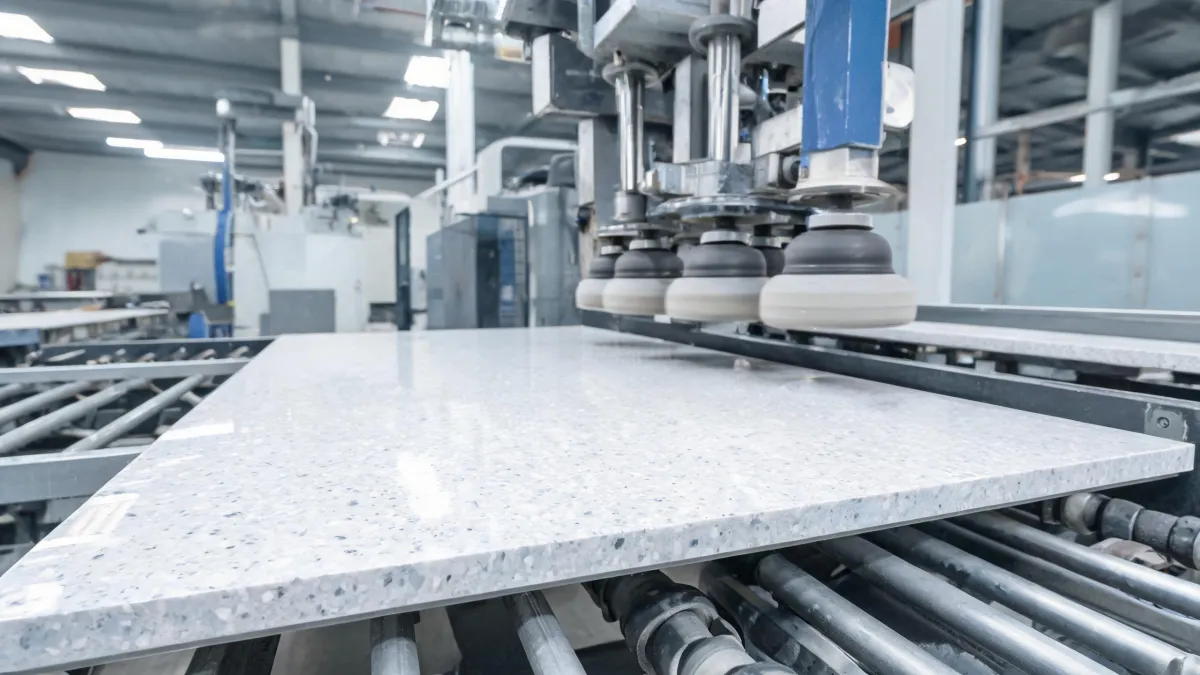
In the stone industry, Breton usually refers to the Breton process, a vacuum-and-vibration method for making engineered quartz. It is a proven process, and many reliable slab producers use Breton equipment or licensed technology. If an engineered stone distributor mentions the Breton process, that is a good entry point.
But it is not a finish line.
It is tempting to think the process makes the product identical. That oversimplifies what can go wrong after the process. The resin, the quartz, the pigment dosing, the polishing line, the calibration, the inspection standards, and the logistics all affect the slab. I have inspected material from two plants using similar Breton systems where one produced far better consistency. The difference was not the name of the process. It was the operating discipline around it.
So use Breton as a filter. Then evaluate the supplier against a written specification.
Start With a Written Specification
A countertop spec should begin with the basics: material family, thickness, edge profile, finish, and slab size. For B2B buying, however, the basics are not enough. I want a tolerance attached to each requirement.
- Material: quartz, granite, or solid surface, with a commercial grade defined
- Nominal thickness and tolerance, such as 20 mm ± 0.5 mm after calibration
- Color and pattern movement based on a physical master sample
- Finish type and gloss range, where available
- Slab size, squareness, and flatness tolerance
- Water absorption, stain resistance, or other measurable performance targets
- Batch traceability, warranty terms, and required inspection documents
This sounds administrative until something goes wrong. For custom colors, our plant treats ΔE < 2 from the approved master sample as an acceptable pass. At ΔE 2, a trained eye can start to see the difference. We also retain a production sample from each accepted lot. If a later batch drifts, there is a physical record, not someone’s memory.
Three Sourcing Scenarios, Three Decision Rules
There is no universal best supplier. There is a best supplier for your scenario. I use three categories when I help procurement teams source stone.
Scenario 1: The deadline is non-negotiable
Suppose a job has to finish by a specific date. Maybe a kitchen renovation is tied to a tenant move-in, a commercial build has a certificate of occupancy, or a store opening is already advertised. The first thing you need is schedule certainty.
People think rush orders cost more because the supplier is taking advantage of you. Usually the opposite is true. A rush order disrupts planned production, ties up capacity, and takes that capacity away from other work. The premium pays for priority. It also pays for risk; if the supplier misses the slot, the consequences are on them.
In May 2025 we accepted a quote that was 9% higher than an alternative because the cheaper quote came with “probably four to six weeks.” Our customer’s delay penalty was $2,500 per day. A one-week miss would have cost more than the entire price difference. The higher quote included a confirmed production slot and delivery window. The job shipped on time.
The counterintuitive part: a cheaper but less certain delivery can be the most expensive option you ever buy. If your deadline has real consequences, ask for a confirmed window. If the supplier cannot give one, find out why. Probably is not a schedule.
Scenario 2: You are sourcing a custom color or private label
The second scenario is for OEMs, private-label brands, and any team that wants a quartz or solid-surface line that looks different from everything else in the market. Here, the product is not the only thing under review. The sample process is too.
If you are doing solid surface sourcing, remember that solid surface behaves differently from quartz. It is easier to seam, more flexible in thermoforming, and less forgiving of some fabrication mistakes. A source good at quartz is not automatically good at solid surface. Ask about the formulation, joint adhesive, and thermoforming support.
For custom colors, ask for a pilot batch before committing to a full run. Insist on a physical master sample, signed and dated. Define the acceptable tolerance for color, thickness, polish, and edge consistency. Ask which measurement instruments the distributor uses. If the answer is we will match it visually, keep looking. Visual matching is part of the process, but it should not be the whole process.
The surprise here is not the pilot cost. It is how quickly a cheap pilot becomes an expensive launch. In the past 12 months, I have rejected roughly 6% of first deliveries because they did not match the approved sample. Some of those were from suppliers who had impressive catalogs but weak quality checks. A rejected first shipment delays your schedule and your customer’s schedule. Paying for a disciplined pilot is cheap insurance.
Scenario 3: You need consistency across phases or locations
The third scenario is a multi-phase commercial project or a single specification repeated in many locations. The countertops have to match in phase one, phase two, and phase three. That changes what you need from a supplier.
If you plan to reorder the same material months later, ask how batches are coded, whether samples are retained for every lot, and whether the distributor can document the source of each slab. Ask if third-party inspection is allowed before dispatch. Ask if the factory can reserve a production lane when your schedule is still firming up. A distributor with a process for future orders is often a better partner than one with only a deep warehouse.
In this scenario, the lowest bid is rarely the actual low bid. A slight mismatch in phase two can require replacement of the first phase, which is not a materials cost. It is a construction cost, a design cost, and a client-relations cost.
How to Tell Which Scenario You Are In
If you are not sure, ask three questions.
One: what does a missed date cost? If the answer is anything more than a minor inconvenience, your decision belongs in scenario one.
Two: whose brand is on the finished countertop? If the slab will carry your brand or your customer’s brand, you need scenario-two sample discipline.
Three: will you need more material later? If this is the beginning of a longer program, you are in scenario three, whether or not you ordered all of it today.
Bottom Line
Search the word breton and the internet may show a cap or a horse. The Spruce Pets can take care of the horse content; a clothing shop can take care of the cap. This page is about the breton used in stone manufacturing, where the name is a starting point, not a guarantee.
The best engineered stone distributor for your project is the one whose process, tolerances, and promises match the reality of your schedule. A clear specification is your technical target. A quality audit is your risk control. A confirmed delivery window is your protection. Combine all three and the countertop has a much better chance of looking right, arriving on time, and staying that way.
That is the specification nobody writes down, and it is the one that matters most.